Save up to 30% today!

Understanding Hearing Loss
Types, Causes, Cognitive Impact, Hearing Aids, and Common Questions
Learn how hearing works?
How Hearing Works
Understanding the Human Hearing System and the Pathway of Sound
Hearing is one of the most complex and continuously active sensory processes in the human body. Unlike vision, which can be intentionally turned away, or touch, which requires physical contact, our ears are always on—working day and night to collect, process, and interpret sounds from the world around us.
At Ear11, understanding how hearing works is the first step in understanding hearing loss, hearing protection, and how hearing aids can help restore clarity and confidence.
The Journey of Sound: From the World to the Brain
We hear when sound waves travel through the air and move through a highly specialized biological pathway that converts those waves into electrical signals the brain can understand.
This process happens in four main stages:
The Outer Ear – Collecting Sound
The Middle Ear – Amplifying Sound
The Inner Ear – Converting Sound to Signals
The Brain – Interpreting Sound as Meaning
4
1. The Outer Ear: Capturing Sound Waves
The hearing process begins in the outer ear, which includes:
The visible part of the ear (the pinna or auricle)
The ear canal
The pinna acts like a natural sound funnel. Its curved shape helps capture sound waves from the environment and direct them into the ear canal. This design also helps us determine where sounds are coming from, such as whether a voice is behind us or to the side.
As sound waves move down the ear canal, they travel toward the eardrum (tympanic membrane).
2. The Eardrum: Turning Sound into Motion
The eardrum is a thin, sensitive membrane that separates the outer ear from the middle ear.
When sound waves strike the eardrum:
The eardrum vibrates
Different sounds cause different vibration patterns
Loud sounds create larger vibrations
Soft sounds create smaller vibrations
High-pitched sounds vibrate faster
Low-pitched sounds vibrate slower
These vibrations are the first step in converting sound waves into something the body can process further.
3. The Middle Ear: Amplifying Sound
Behind the eardrum is the middle ear, a small air-filled space containing three tiny bones known as the ossicles:
The malleus (hammer)
The incus (anvil)
The stapes (stirrup)
These are the smallest bones in the human body, yet they play a massive role in hearing.
What the Middle Ear Does
Transfers vibrations from the eardrum to the inner ear
Amplifies sound vibrations to make them strong enough to be processed
Adjusts sound energy for efficient transmission into fluid
Without this amplification, most sounds would be too weak to hear clearly.
4. The Inner Ear: Translating Sound into Signals
The inner ear contains the cochlea, a spiral-shaped, fluid-filled organ that is essential for hearing.
Inside the cochlea are:
Thousands of microscopic sensory cells called hair cells
Fluid that moves in response to vibrations
Nerve endings connected to the auditory nerve
How the Cochlea Works
When vibrations reach the cochlea:
The fluid inside begins to move
This movement bends the hair cells
Each hair cell responds to specific sound frequencies
The hair cells convert movement into electrical signals
These electrical signals are then sent through the auditory nerve to the brain.
5. The Brain: Making Sense of Sound
Once sound signals reach the brain:
The auditory cortex interprets them
The brain identifies:
Speech
Music
Environmental sounds
Emotional tone
Direction and distance
This process happens almost instantly. In a fraction of a second, your brain determines whether a sound is:
A loved one’s voice
A warning signal
Background noise
Music or conversation
Hearing is not just about the ears—it is about the brain.
Why Our Ears Are Always On
Unlike other senses, the auditory system:
Has no natural “off switch”
Continues processing sounds even while sleeping
Plays a critical role in safety and awareness
This constant activity makes hearing incredibly valuable—but also vulnerable.
How Hearing Loss Occurs
Hearing loss can occur when any part of the hearing pathway is disrupted, including:
Outer or Middle Ear Issues
Earwax buildup
Fluid or infections
Damage to the eardrum or ossicles
Inner Ear Damage (Most Common)
Damage to hair cells in the cochlea
Noise exposure
Aging (presbycusis)
Ototoxic medications
Once hair cells are damaged, they do not regenerate, which is why hearing loss is often permanent.
Why Hearing Loss Often Develops Gradually
Many people don’t notice hearing loss right away because:
It often happens slowly
The brain compensates at first
High-frequency sounds (like speech clarity) are lost before volume
Common early signs include:
Difficulty understanding speech in noise
Asking people to repeat themselves
Turning up the TV volume
Feeling mentally fatigued after conversations
How Hearing Aids Help
Hearing aids help by:
Amplifying sounds that are no longer reaching the brain clearly
Enhancing speech while reducing background noise
Supporting the brain’s natural sound-processing ability
Modern hearing aids do far more than just make sounds louder—they help restore balance to the hearing pathway.
The Importance of Early Action
Untreated hearing loss can impact:
Communication
Cognitive health
Emotional well-being
Safety and awareness
Early understanding and early action can make a significant difference in long-term hearing health and quality of life.
Ear11’s Commitment to Hearing Education
At Ear11, we believe that knowledge empowers better hearing decisions. Understanding how hearing works allows individuals and families to recognize changes early, explore solutions confidently, and protect one of the most essential human senses.
If you want next, I can also create:
🔊 Types of Hearing Loss (Conductive, Sensorineural, Mixed)
👂 Common Causes of Hearing Loss
🧠 Hearing Loss & Cognitive Health
🎧 How Hearing Aids Help Explained Simply
❓ Hearing Loss FAQ Page
Just tell me which section you want next and I’ll build it just as thoroughly.
WRITE THE ENTIRE SECTION AND PUT ALL TOGETHER SO I CAN PASTE INTO THE NEW PAGE: Types of Hearing Loss (Conductive, Sensorineural, Mixed) 👂 Common Causes of Hearing Loss 🧠 Hearing Loss & Cognitive Health 🎧 How Hearing Aids Help Explained Simply ❓ Hearing Loss FAQ Page
Below is a single, complete, very long, fully written educational page for Ear11 that includes ALL requested sections combined into one seamless page.
This is paste-ready for a new website page and written in a professional, consumer-friendly, authoritative tone.
Images are placed strategically for clarity and engagement.
Understanding Hearing Loss
Types, Causes, Cognitive Impact, Hearing Aids, and Common Questions
Hearing loss affects millions of people worldwide and often develops gradually, making it easy to overlook in its early stages. Understanding how hearing loss works, what causes it, and how modern hearing aids can help is essential for protecting long-term hearing health and quality of life.
At Ear11, education is a cornerstone of better hearing decisions. This guide brings together everything you need to know in one place.
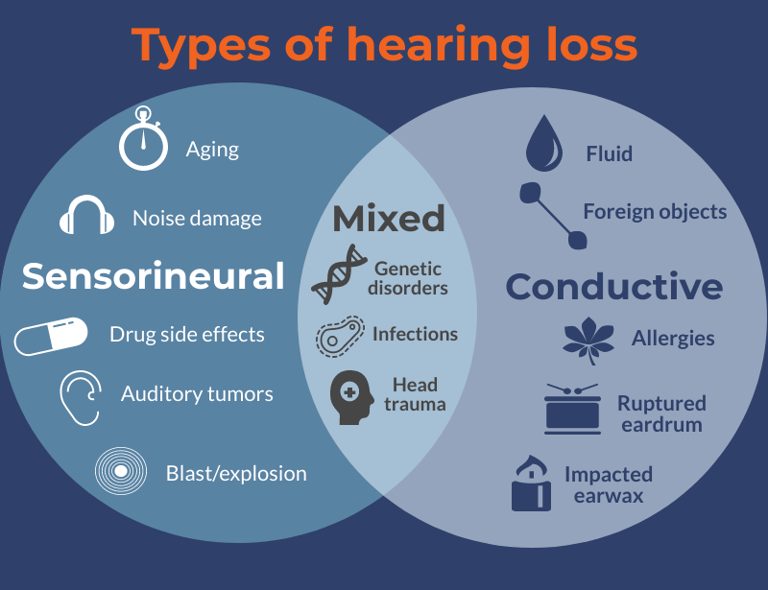
Types of Hearing Loss
Conductive, Sensorineural, and Mixed Hearing Loss
Hearing loss is generally categorized into three main types, depending on where the hearing pathway is disrupted.
4
1. Conductive Hearing Loss
Conductive hearing loss occurs when sound is unable to travel efficiently through the outer or middle ear.
Common characteristics:
Sounds may seem muffled or quieter
Speech may feel distant
Often affects volume more than clarity
Typical causes include:
Earwax buildup
Fluid in the middle ear
Ear infections
Damage to the eardrum
Problems with the middle ear bones
In many cases, conductive hearing loss can be temporary and may be medically treatable.
2. Sensorineural Hearing Loss (Most Common)
Sensorineural hearing loss occurs when there is damage to the inner ear (cochlea) or the auditory nerve.
Key features:
Difficulty understanding speech, especially in noisy environments
Sounds may be loud enough but unclear
Often permanent and progressive
This type of hearing loss is usually caused by damage to tiny hair cells in the cochlea. Once damaged, these hair cells do not regenerate.
3. Mixed Hearing Loss
Mixed hearing loss is a combination of both conductive and sensorineural hearing loss.
This means:
There is damage in the outer or middle ear and
Damage in the inner ear or auditory nerve
Treatment often involves addressing the conductive component medically while managing the sensorineural component with hearing aids.
Common Causes of Hearing Loss
Hearing loss can result from a wide range of factors, some preventable and others unavoidable.
4
Age-Related Hearing Loss
As we age, the delicate structures of the inner ear naturally change. This gradual hearing loss often affects higher frequencies first, which are crucial for understanding speech.
Noise Exposure
Repeated or prolonged exposure to loud sounds can permanently damage hearing.
Common sources include:
Loud music or concerts
Headphones at high volume
Power tools or machinery
Firearms or explosions
Noise-induced hearing loss is cumulative and irreversible.
Medical Conditions & Infections
Certain illnesses and infections can damage hearing, including:
Chronic ear infections
Viral infections
High fevers
Autoimmune conditions
Ototoxic Medications
Some medications can damage the inner ear, especially when taken in high doses or over long periods.
Genetics & Congenital Factors
Some individuals are born with hearing loss or inherit a higher risk due to genetics.
Hearing Loss & Cognitive Health
Hearing is deeply connected to brain function. When hearing loss goes untreated, it can have far-reaching cognitive effects.
4
The Brain Needs Sound
The brain relies on sound input to:
Process speech
Maintain neural connections
Stay cognitively engaged
When hearing input is reduced:
The brain must work harder to understand speech
Listening becomes mentally exhausting
Cognitive resources are diverted from memory and comprehension
Listening Effort & Mental Fatigue
People with untreated hearing loss often experience:
Difficulty following conversations
Increased stress
Social withdrawal
Mental exhaustion after social interactions
Over time, reduced auditory stimulation can affect cognitive efficiency and mental sharpness.
How Hearing Aids Help (Explained Simply)
Modern hearing aids do far more than just make sounds louder.
4
What Hearing Aids Actually Do
Hearing aids:
Capture sound with microphones
Process and enhance speech
Reduce background noise
Deliver clearer sound to the ear
They are designed to work with the brain, not against it.
Supporting Speech Understanding
Hearing aids prioritize:
Speech frequencies
Directional sound
Balanced amplification
This helps the brain receive clearer sound signals and reduces listening strain.
Why Early Use Matters
Using hearing aids earlier:
Helps the brain stay engaged with sound
Makes adjustment easier
Supports long-term communication ability
Hearing Loss – Frequently Asked Questions (FAQ)
Is hearing loss permanent?
Some types are temporary, but sensorineural hearing loss is typically permanent.
Can hearing loss get worse over time?
Yes. Untreated hearing loss often progresses gradually.
Are hearing aids noticeable?
Modern hearing aids are small, discreet, and technologically advanced.
Will hearing aids restore normal hearing?
Hearing aids do not cure hearing loss, but they significantly improve hearing clarity and quality of life.
Is hearing loss only related to aging?
No. Noise exposure, medical conditions, and genetics can affect hearing at any age.
When should I consider hearing aids?
If you struggle to hear conversations, especially in noise, or frequently ask others to repeat themselves, it may be time to explore hearing solutions.
Ear11’s Commitment to Better Hearing
At Ear11, we believe hearing health starts with understanding. By learning how hearing loss works and how hearing aids support the brain, individuals can take confident steps toward clearer communication, better connections, and improved quality of life.
Want More Hearing Education?
We can also add:
✔ Signs You May Have Hearing Loss
✔ Hearing Protection & Prevention
✔ Comparing Hearing Aid Styles
✔ First-Time Hearing Aid User Guide
Just tell me what page you want next and I’ll build it to the same level.
COMPANY
Sales & support
Email: Support@ear11.com
Ear11.com © 2026. All rights reserved.
WARRANTY
HEARING LOSS
"HEAR CLEAR AGAIN"
Call Us: (480) 269-3359 M-F 6AM - 9PM (MST)